21 Jul 2026
Cross-Platform Synchronization: How Notification Systems Coordinate Bonus Triggers with Event Milestones and Account Safeguards
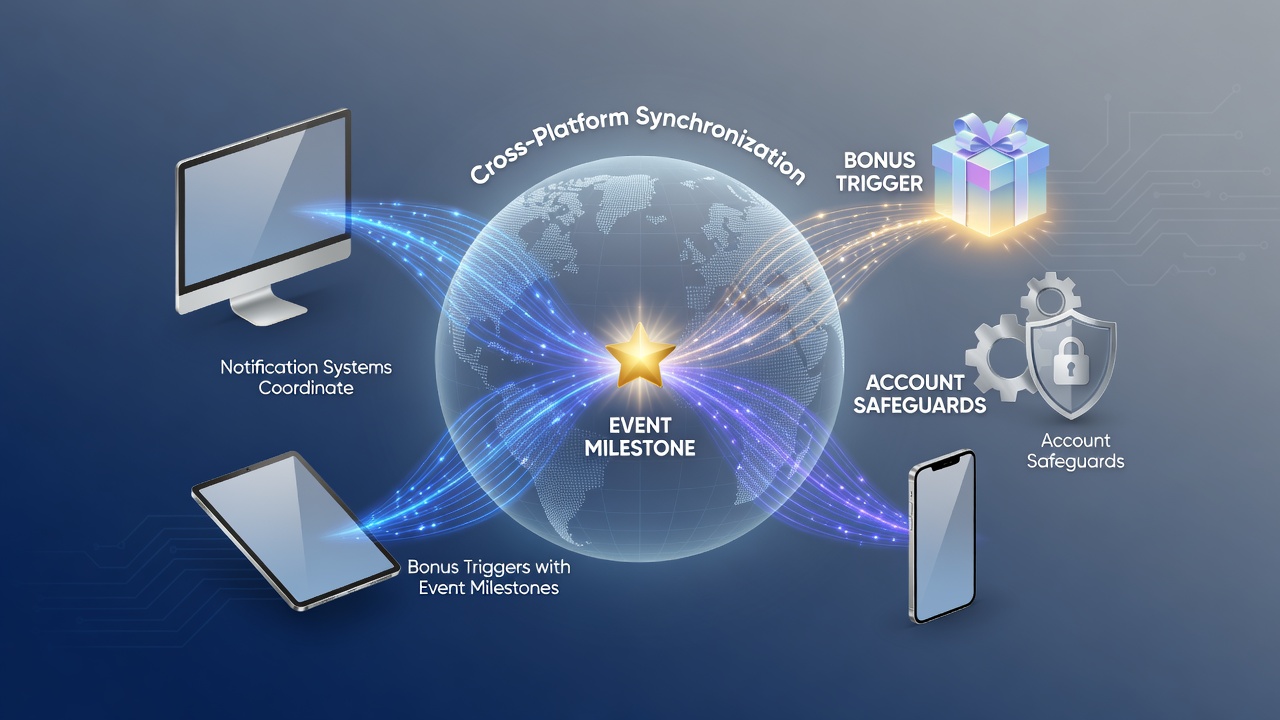 Notification systems in digital gaming environments handle real-time data exchanges between devices, servers, and user accounts to align bonus activations with specific event thresholds. These systems track player activities such as wager volumes, session durations, and deposit patterns across mobile applications and desktop interfaces, then push coordinated alerts that activate rewards only after milestones register in centralized databases. In July 2026, industry reports from the International Association of Gaming Regulators documented expanded use of API-driven synchronization layers that reduced trigger delays from several seconds to under 200 milliseconds on average.
Core Mechanisms Behind Cross-Platform Notification Flows
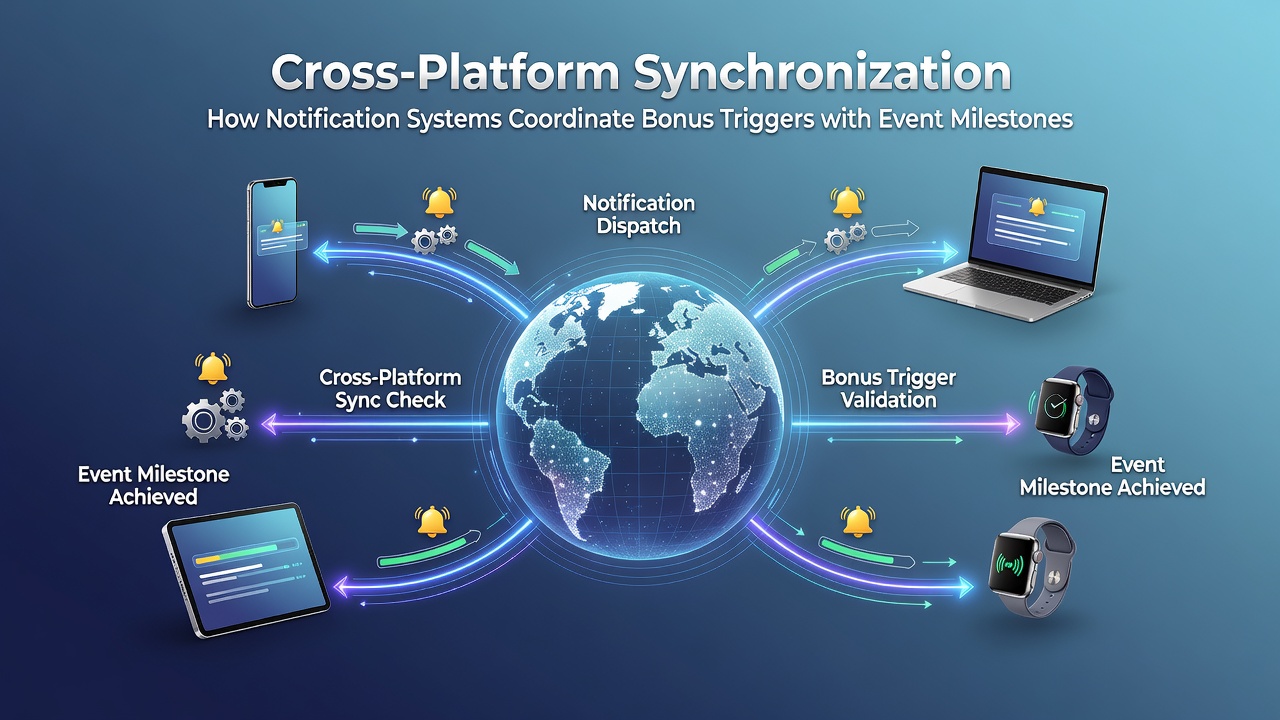
Central servers maintain unified player profiles that update through encrypted channels whenever activity occurs on any connected device. When a milestone such as a cumulative wager amount or consecutive login streak reaches its defined value, the system evaluates associated bonus rules and generates a notification payload that includes reward details, expiration timers, and redemption instructions. This payload travels simultaneously to all registered endpoints, ensuring the same message appears whether the user checks a smartphone or logs in via browser. Researchers at the University of Nevada's International Gaming Institute noted that such architectures rely on event-driven architectures where WebSocket connections maintain persistent links, allowing instantaneous updates without repeated polling requests.
Bonus Trigger Coordination with Event Milestones
Event milestones encompass measurable actions including total spins completed, live dealer rounds participated in, or sports bet settlements reached. Notification systems compare these metrics against predefined bonus tables stored in secure cloud repositories, then initiate triggers only after verification confirms both the milestone and any accompanying account status requirements. For instance, a deposit bonus activates solely when the system registers both the funding event and the absence of active self-exclusion flags. Data from iGaming Ontario's 2025 annual review showed that synchronized systems processed over 4.2 million bonus activations monthly, with 98.7 percent accuracy in milestone matching across platforms. Observers note that conditional logic engines evaluate multiple variables at once, incorporating time zones, device types, and prior bonus history to prevent duplicate issuances.
Integration of Account Safeguards During Triggers
Account safeguards embed directly into the notification workflow through automated compliance checks that run before any bonus message delivers. Systems scan for limit breaches, cooling-off periods, or deposit velocity anomalies, then either withhold the trigger or append advisory text within the same notification. When a player approaches a daily loss threshold, the notification includes both the pending bonus details and a clear statement of remaining allowance, delivered through the same channel. This dual-purpose design stems from technical standards promoted by the Responsible Gambling Council in Canada, which emphasize embedding protection prompts at the moment of reward notification rather than as separate follow-ups. Figures reveal that platforms adopting integrated safeguards recorded a 23 percent reduction in limit override requests during the first half of 2026.
Technical Architecture Supporting Real-Time Alignment
Modern implementations utilize microservices that separate milestone tracking, bonus rule application, and safeguard validation into distinct yet interconnected modules. Each module communicates through message queues that guarantee delivery order and retry failed transmissions automatically. Cross-platform consistency requires timestamp synchronization across global data centers, typically achieved via protocols such as Precision Time Protocol, which maintains sub-millisecond accuracy. When one service detects a milestone completion, it publishes an event that triggers parallel evaluations in the bonus and safeguard services, after which a unified notification assembles and routes to the user's active sessions. Studies conducted by the Australian Institute of Family Studies on digital gambling interfaces highlighted that such queue-based designs handled peak loads exceeding 150,000 concurrent events without message loss during major sporting events in early 2026.
Challenges in Maintaining Consistency Across Devices
Network variability and device state differences create potential points of desynchronization that engineers address through idempotent notification designs. Each alert carries a unique event identifier that prevents reprocessing if the same message arrives via multiple routes. Offline periods receive queued notifications upon reconnection, with the system validating whether the original milestone still qualifies under current account conditions. Those who've examined platform logs observe that fallback mechanisms, including SMS gateways for critical safeguard alerts, activate when push channels fail for more than 30 seconds. Regulatory frameworks in multiple jurisdictions now require documented failover testing at least quarterly to confirm that no bonus activates without corresponding safeguard verification.
Future Developments Observed in Mid-2026
Emerging patterns include greater incorporation of machine learning models that predict likely milestone achievement and pre-stage notifications for faster final delivery. These models analyze historical patterns while respecting data minimization principles outlined in various privacy regulations. Cross-border operators increasingly adopt standardized event schemas promoted by the World Lottery Association, which facilitate consistent handling regardless of the player's registered region. As of July 2026, several major platforms reported successful pilots where notification latency dropped below 50 milliseconds on 5G networks, allowing near-instant alignment between live sports outcomes and associated bonus releases.
Conclusion
Notification systems achieve reliable coordination by combining centralized data models, event-driven processing, and embedded compliance checks that operate uniformly across all user devices. The result supports timely bonus delivery tied directly to verified milestones while enforcing account safeguards at every step. Continued refinement of these architectures through 2026 and beyond reflects ongoing alignment between technical capabilities and regulatory expectations across international markets.